


I woke up and my face was damp. I opened my eyes and felt the warmness trapped inside my closed room. I looked around for the air conditioner and noticed the two green lights were off. The power was out.
I wondered how long the power was out? When would it come back on? Does this happen often?
After three hours without power I got my answer. Frequently. After talking with my roommate, I learned that the power goes out at least twice a day in the Monsoon months. Myanmar has a tropical climate with three different seasons. The first is the hot season which runs from March through April. The second is rainy season which runs May through October. The third is the cool season which is November through February.
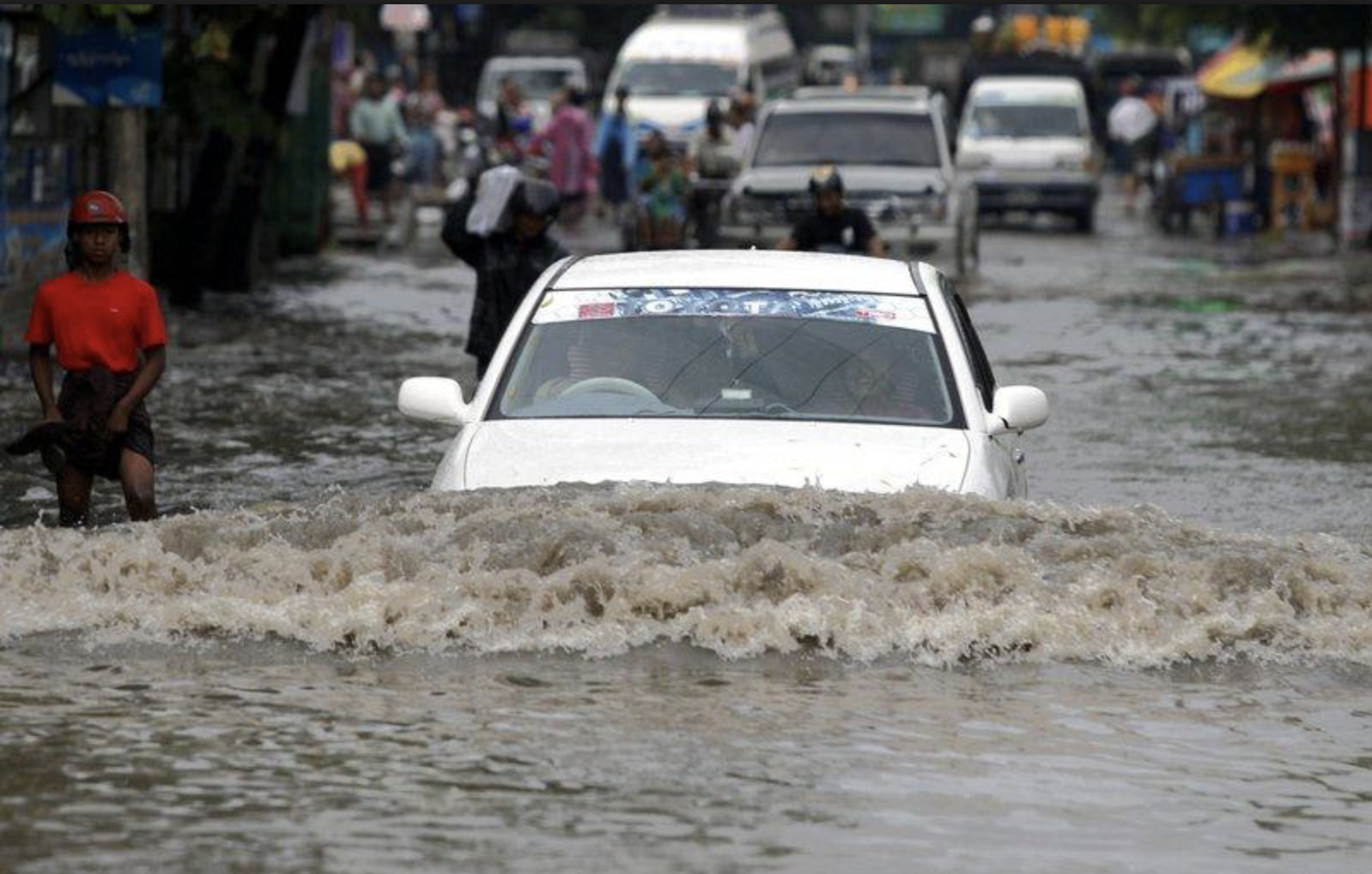
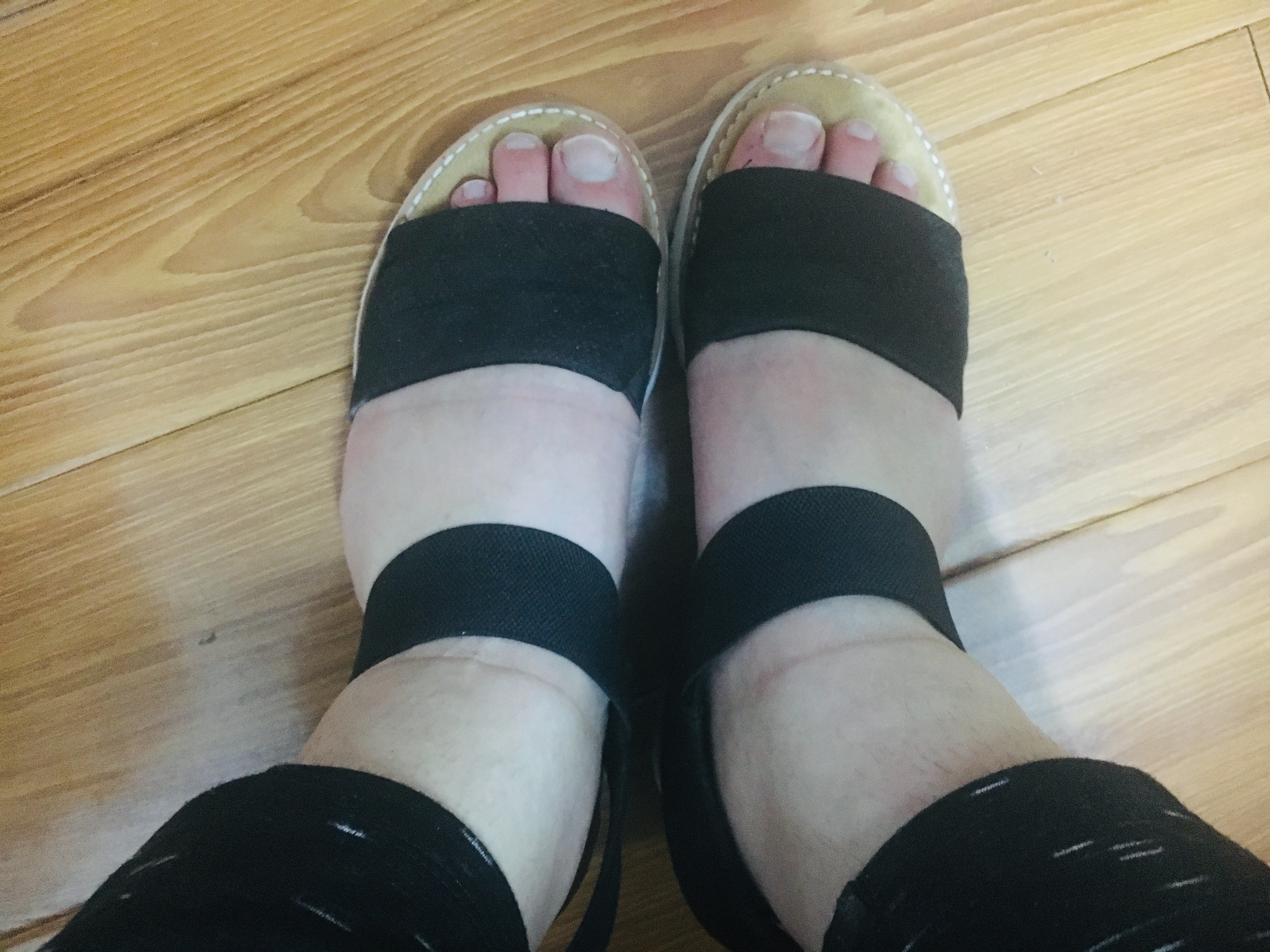
When packing for Myanmar I was told to bring open toed shoes. This was curious to me but was further explained that during the rainy season there is heavy torrential downpours. The drains become flooded with water and the roads get blocked. Accidents happen frequently as buses and cars collide with each other. Trees get uprooted and telephone lines get cut off because of the high wind conditions. Health decreases as many people get influenza from not changing their clothes when wet quickly. The mood is somber, and many people often go to work and straight home as they don’t want to be caught in the middle of a downpour. I was advised to ALWAYS carry an umbrella on me at all times, despite how sunny it looks because in an instant I could be completely drenched.
What was interesting to me is the impact on mood. Being born and raised in Michigan, I find myself getting very tired and drained during the darker and colder months along with many people around me. I developed this perspective that associated seasonal affective disorder (SAD) with winter months. Come to find out it can happen during any time of the year, and that’s what Burmese people go through during rainy season.
After becoming curious to learn more about seasonal affective disorder, I did some searching. Seasonal affective disorder is a type of depression that is related to changes in seasons. Symptoms of seasonal affective disorder include: feeling depressed most of the day nearly every day, losing interest in activities you once enjoyed, having low energy, having problems with sleeping, experiencing changes in your appetite or weight, feeling sluggish or agitated, having difficulty concentrating, feeling hopeless or worthless or guilty, and having frequent thoughts of death or suicide. Symptoms specific to fall and winter seasonal affective disorder include oversleeping, appetite changes especially a craving for foods high in carbohydrates, weight gain, tiredness or low energy. Symptoms specific to Spring and Summer seasonal affective disorder include trouble sleeping or insomnia, poor appetite, weight loss, and agitation or anxiety. The specific cause of seasonal affective disorder still remains unknown. Seasonal affective disorder is diagnosed more often in women than men and occurs more frequently in younger adults than older ones. There are increased risks to developing seasonal affective disorder including family history, having major depression or bipolar disorder, and living far from the equator. Thank you, Michigan.
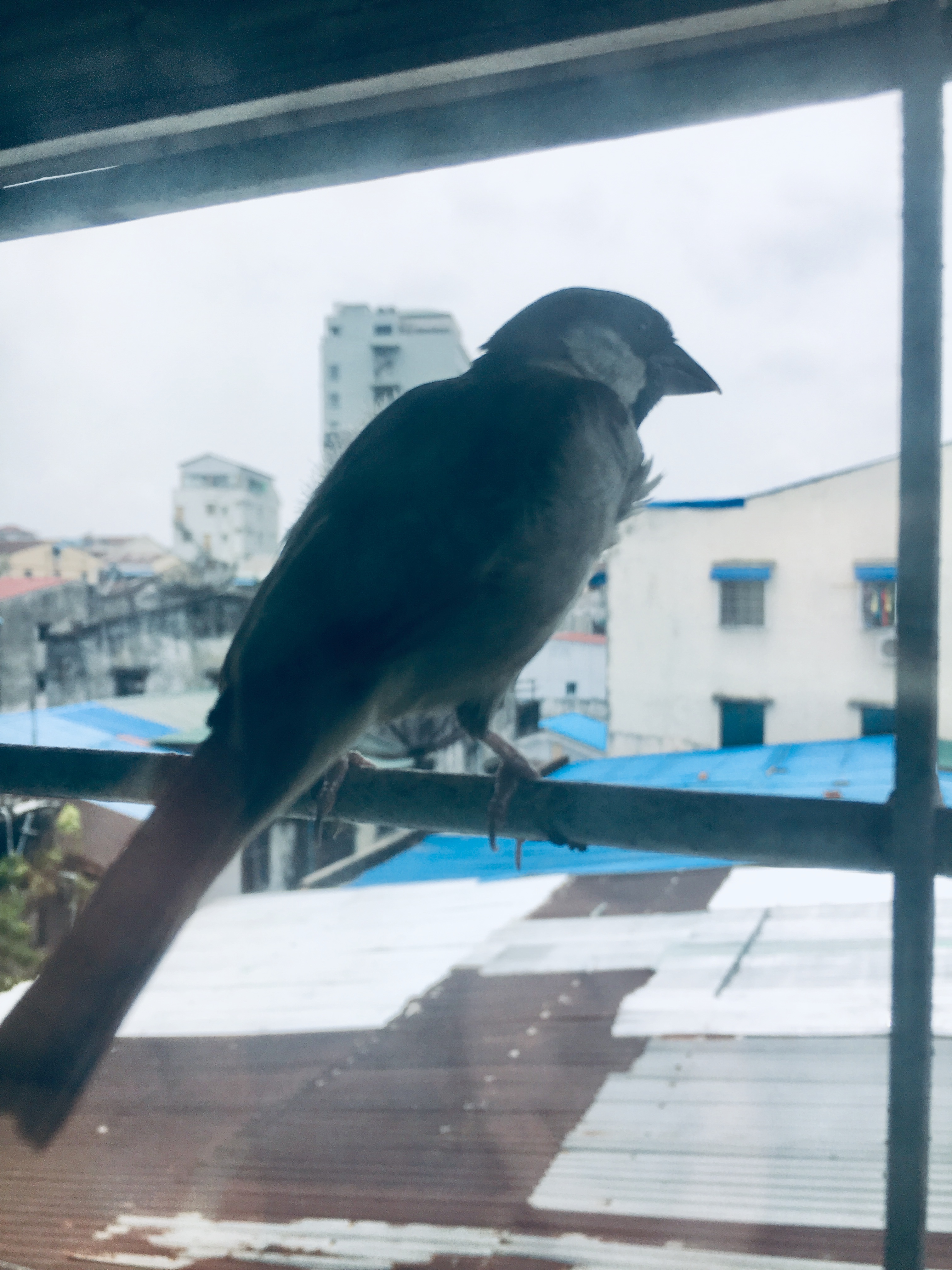
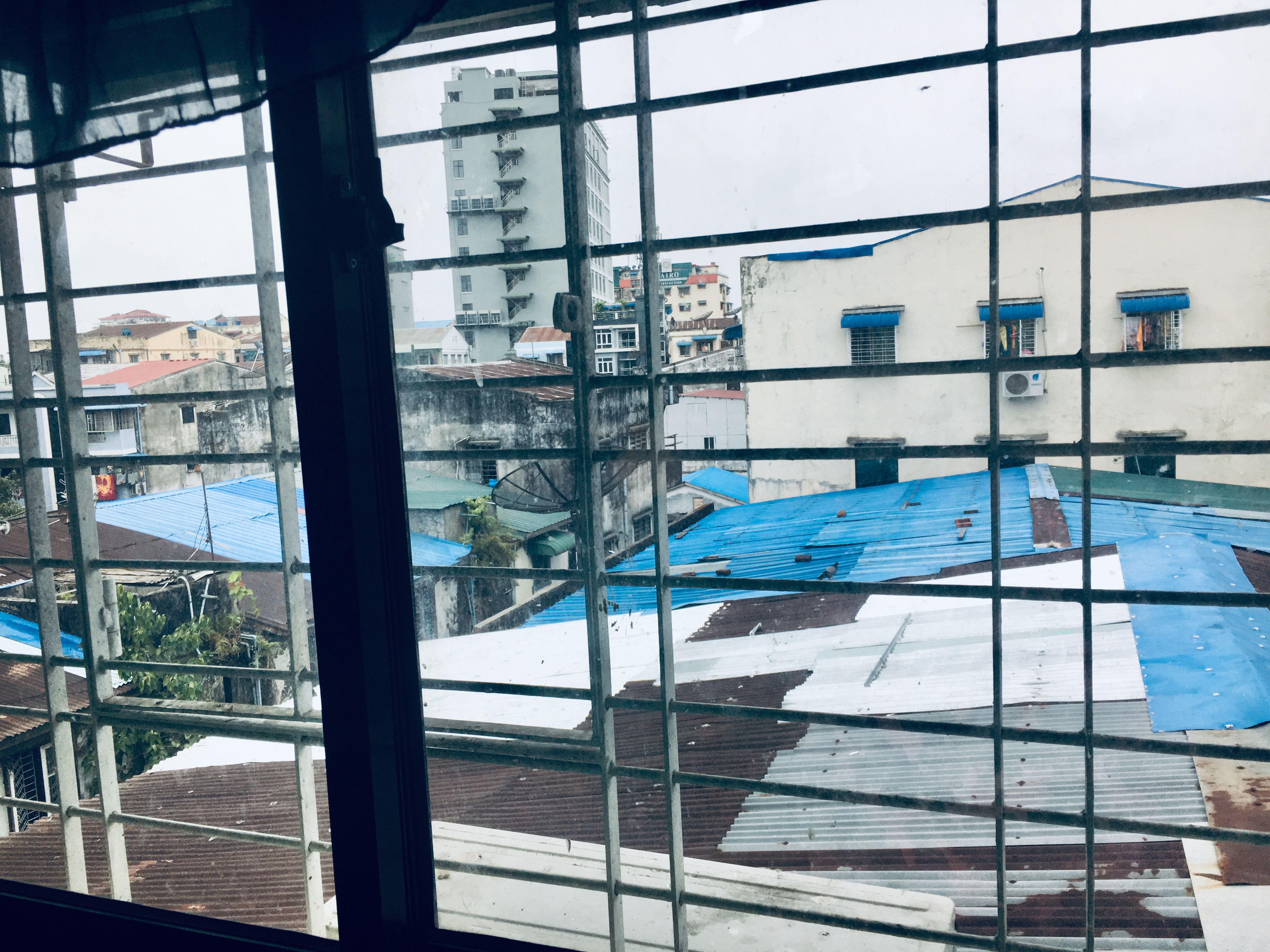
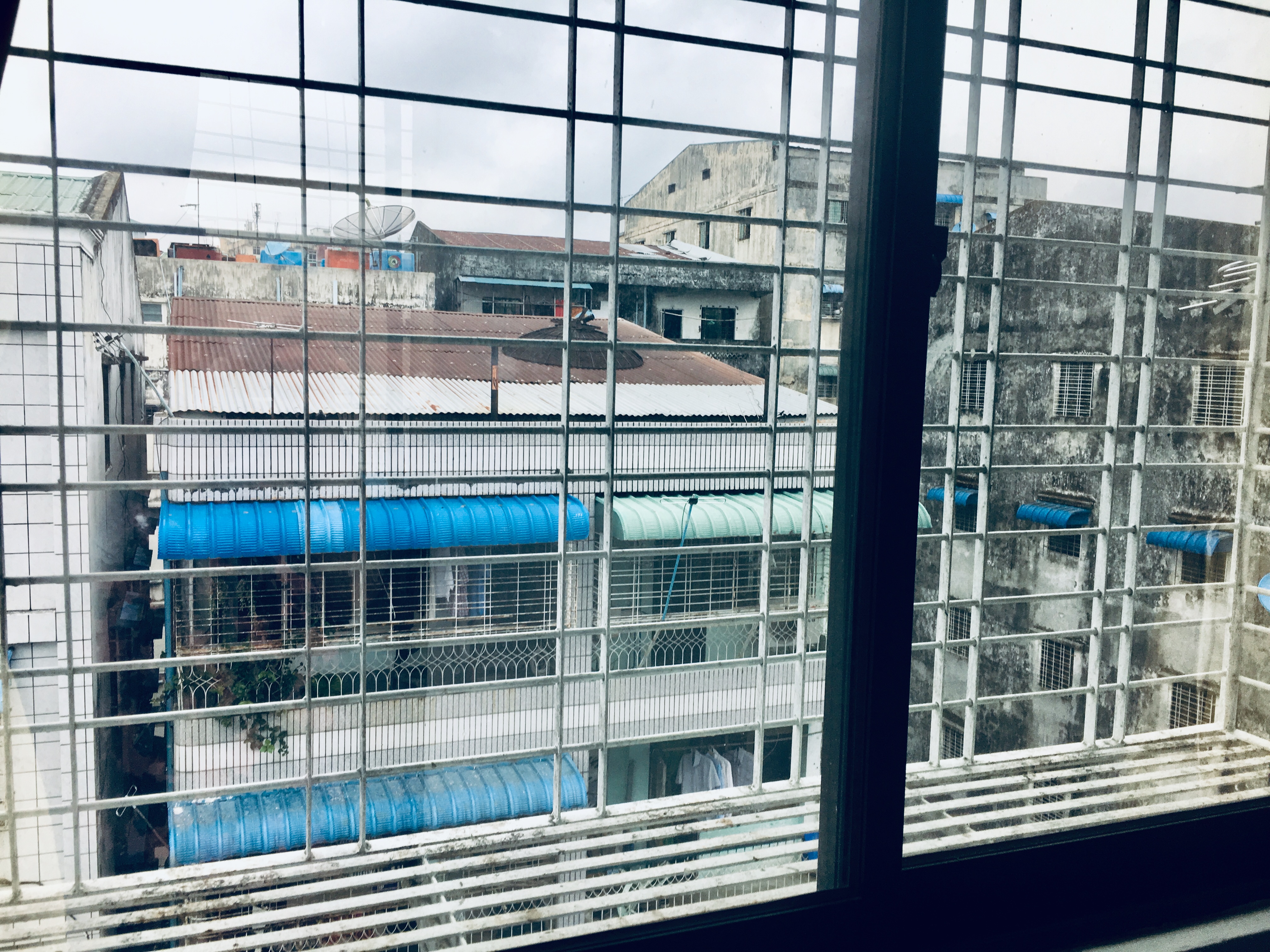
As I got up from bed, I noticed a bird perched right outside my window. Now I’m very afraid of most animals and bugs. I’m almost positive that this is the closest I’ve ever been to a bird in my life. For once I didn’t feel the compulsory reaction to run. I noticed how calm it was. It looked back at me and proceeded to stare off into the distance. I sat there admiring the bird, hoping I could get that peaceful someday.
After the power came back on, I was able to take a shower since Friday morning. Today I took my first of many cold showers.
Surprisingly I’ve seen very little bugs here. The most I’ve seen is a few ants and the occasional mosquito. Although I’ve been warned that cockroaches are common, lizards and geckos frequent many houses and buildings, and there will be massive rat carcasses all over the streets.

I made my way out of the apartment and into Yangon for the first time. I struggled figuring out which key was for each lock. And even after I got the right key to fit into the hole, it is very difficult to try and stick parts of your hand through these gates to finagle a lock on the other side.

The moment I opened our front door, the heat hit me in a strong wave. It was about 2pm and I immediately wanted to go right back inside. I thought the weather at 11pm at night was bad, but that was nothing compared to the daytime. I forced myself to push through and continue on down the 6 floors of steps.
I had three main goals for today. 1) exchange money from US currency to Myanmar Kyat (MMK) [pronounced the shortened version which sounds like chat with a long a]. 2) purchase a SIM card and top ups so I can have a working phone and internet for my laptop. 3) go grocery shopping.
I was told there would be banks near the main grocery store (City Mart) and that there would be phone stores along the way where I could buy a SIM card. City Mart sells top up cards but not the actual SIM card so I would have to do it in two parts. Top up cards essentially are the data and minutes that can be added to phones to allow the SIM card to function.
There are three prepaid cellular SIM companies in Myanmar. The Myanmar Post and Telecommunication (MPT) is government owned and military controlled, which deters many people given the government censorship laws. MPT had a monopoly all over the nation until 2013. Then competition from two foreign companies came in and reduced the costs: Qatar-based Ooredoo and Norway-based Telenor. Buying a SIM in Myanmar cost $3,000 in 2001 and $250 in late 2013 under MPT control. Since July 2015, SIM cards cost between $2-3.
Given that there are numerous SIM card providers, I wasn’t sure which top ups would by at City Mart I figured that I should purchase my SIM card prior to the grocery store. I kept looking around for banks but did not see any. As I continued down the path towards the store, I noticed numerous phone shops. I decided to go inside one.
My second experience interacting with people that speak no English. This time I couldn’t call anyone. So, I tried in numerous ways to communicate. Basic words. Gestures. Pointing at the service provider on my phone. Multiple staff even came over to try and help. Eventually I had a breakthrough and they said, “Telenor new?” and I shook my head yes. She went to the back and brought a SIM card out. I pulled out my credit card and she shook her head no. I hadn’t thought about that. I said I would be back, and she smiled.
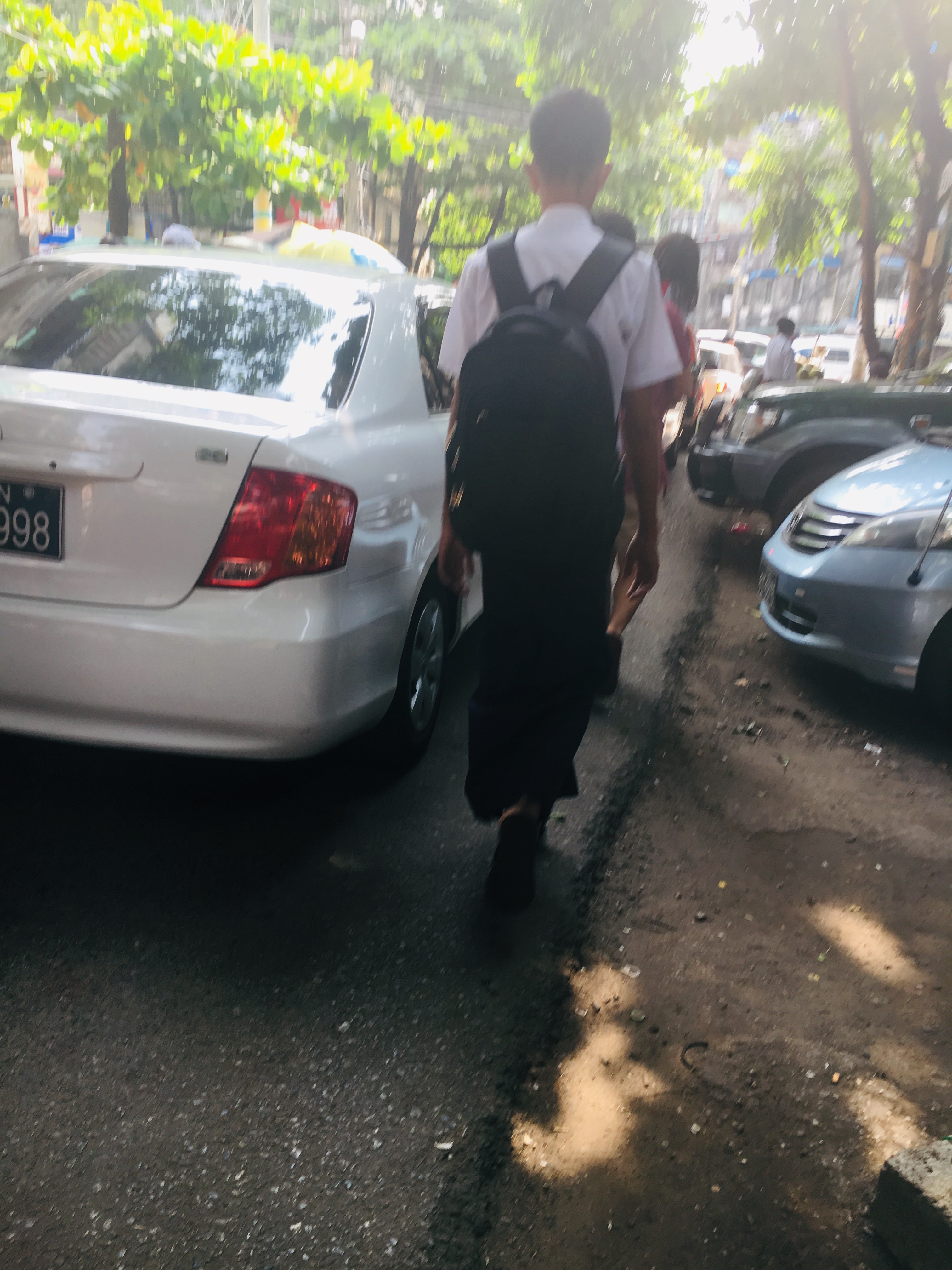
I continued on my route to the City Mart. Walking in Yangon is very different. I thought my time in Ann Arbor with the congestion of cars and tens of thousands of students would help me be well equipped. No. First of all there are no sidewalks. Since shops and people are selling food and trinkets on the side of the road, combined with parked cars, there is an extremely narrow place that people have to squeeze between the resting cars and ongoing traffic vehicles. Not to mention rickshaws also fitting in this space. It’s a constant battle of being self-aware, checking for cars, watching what other people are doing, being honked at constantly, and contorting my body.
As the sweat continued to roll down my face after only 8 minutes, I found myself turning onto Pyay Road and nearing the City Mart. Thankfully I noticed out of the corner of my eye an ATM. I crossed through a construction site and made it to the bank. I withdrew 300,000 MMK. It was such a wide stack of cash I was amazed that it even fit into my wallet (barely). For the moment I felt like a baller, but it’s the equivalent of approximately $200 USD.
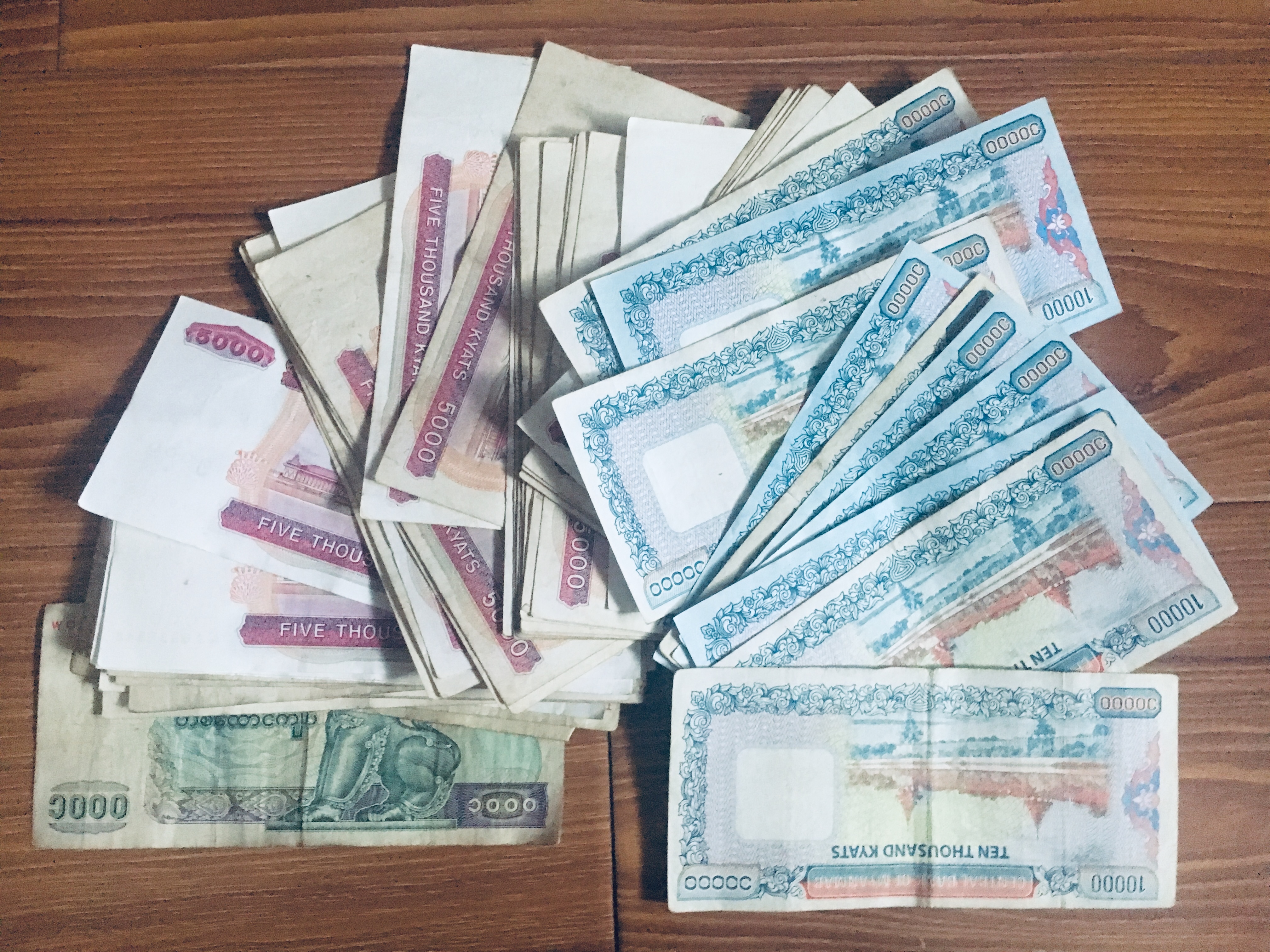
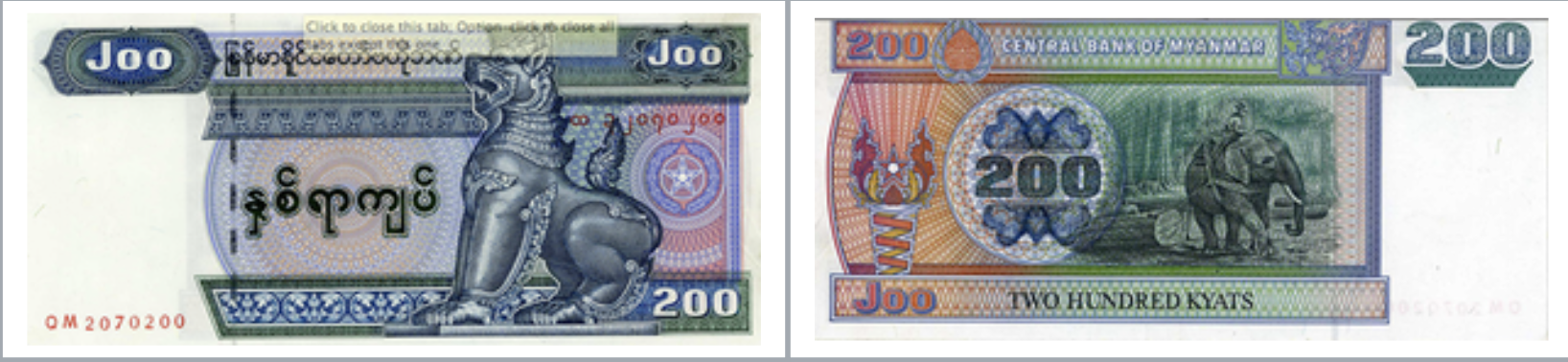
The money is quite interesting. I always love foreign currency. Compared to the United States, it’s usually much more colorful and has exciting graphics. For example, Kyat have a lot of denominations (50 pyas, 1, 5, 10, 20, 50, 100, 200, 500, 1000, 5,000, 10,000) and instead of featuring famous presidents, important landmarks, animals, and statues are displayed. What I found really neat is that on one side, the money is in Burmese and on the other side the money is in English.
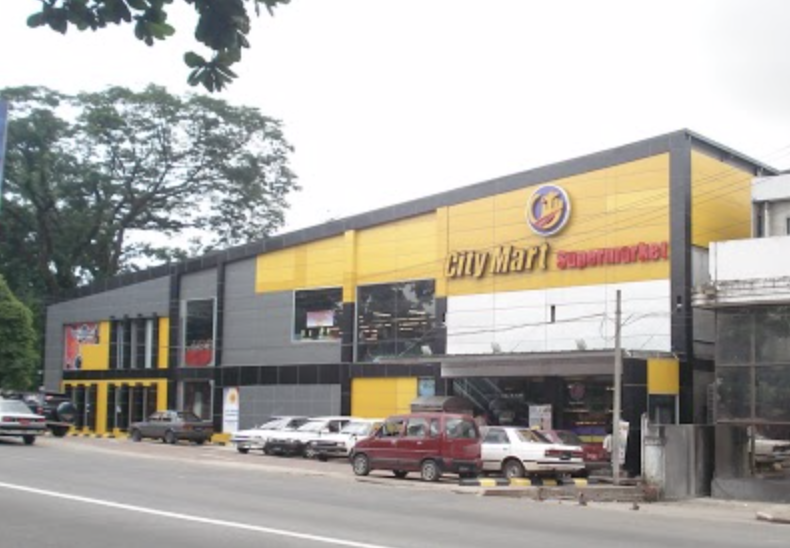
After exchanging money, I walked about a minute to City Mart. The great thing is that it’s 24 hours. Reminds me of Meijer. Love it. Also, similarly to Meijer it doesn’t just sell groceries but beauty products, furniture, bedding, etc. I grabbed a basket and started wheeling around. The first major difference I noticed was there were tons of fruit I’ve never heard of or seen. I began to notice that their eggs are treated differently and aren’t refrigerated. The majority of the store had lots of Asian products, with few Western items. I did take note of Goldfish, Pringles, Ferrero Rocher, and Oreos. I purchased towels, bedding, blankets, rice, chicken, and pasta. The staples. The second thing I noticed was the music. In the beginning I didn’t take notice as it was traditional Burmese music, but then I heard Ciara Like a Boy blaring. Throughout my shopping trip they seemed to rotate between traditional music and American R&B/Rap.
While I was walking around all of a sudden everything got quiet and went black. The power went out. I wasn’t sure what to do as I was about to check out. Do the cash registers work? What happens to all this food in the store? How long will it take? Do I put the stuff back? Thankfully after about five minutes the power came back on and I was able to check out. It seems that power outages will be a common occurrence here, no matter where I am.
On the way out of City Mart my eye wandered to this shop in the basement. Milkshakes. Chocolate. Vanilla. Strawberry. Avocado. For less than $1. Stay tuned.
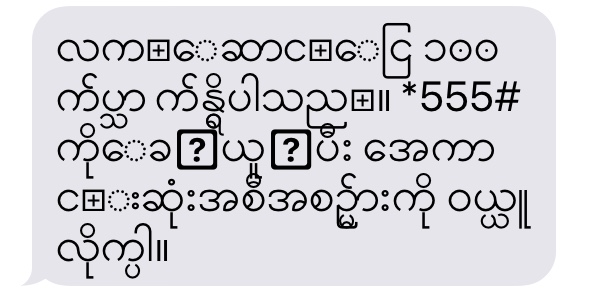
With way too many grocery bags to carry in hand, trying to squeeze between the cars was extremely difficult. I made my way back to the phone store and was able to pick up a SIM card. After returning home, my roommate graciously helped me as I couldn’t even figure out where my SIM card was located in my phone. The problem was that once I loaded my top up cards onto my account, the messages started flowing in Burmese. We started buying and purchasing data without knowing what.
My friend then asked me if I wanted to go to the Makers Market with her. The Makers Market is basically a giant farmers market with handmade arts, crafts, food vendors, and music at sunset on the water of Kandawgyi Lake. The Karaweik Gardens on Kandawgyi Lake is marked by Karaweik Hall, which is a massive golden floating duck boat, nothing like I’ve ever seen before or could even describe. Just wow.

On the way to the Makers Market we took the trash out from our apartment. Unlike opening the door and taking it to the end of the driveway for collection, we grabbed the bags, made our way down the 6 floors, crossed numerous streets and busy highways to a central dumping place on the side of the road for the entire Neighborhood.
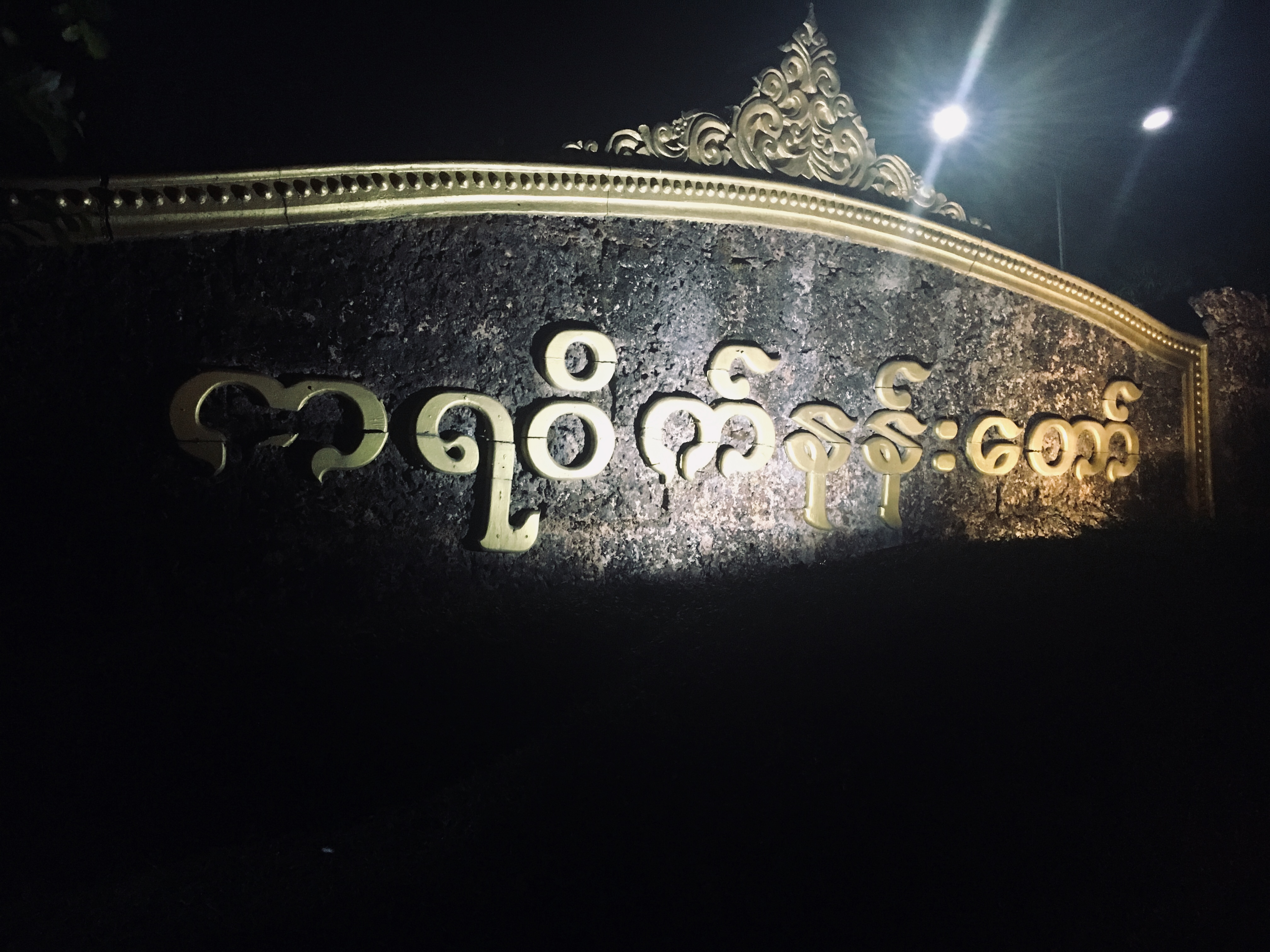
While at Karaweik Gardens, Makers Market was a familiar and unfamiliar experience all in one. It looked like a typical farmers market with white tents, homemade artisanal crafts, music, and people eating. But completely different food, different music, and different types of crafts.
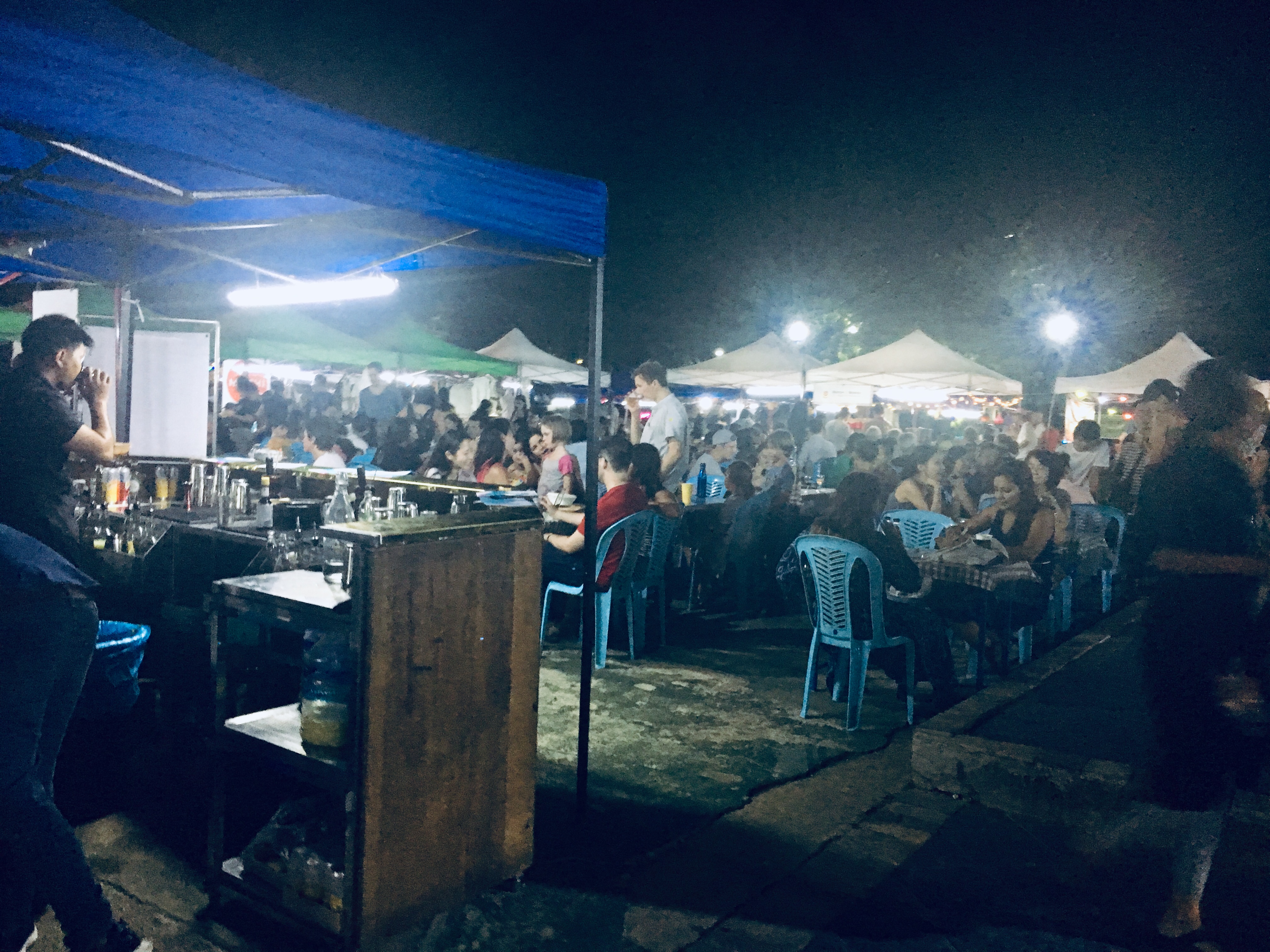
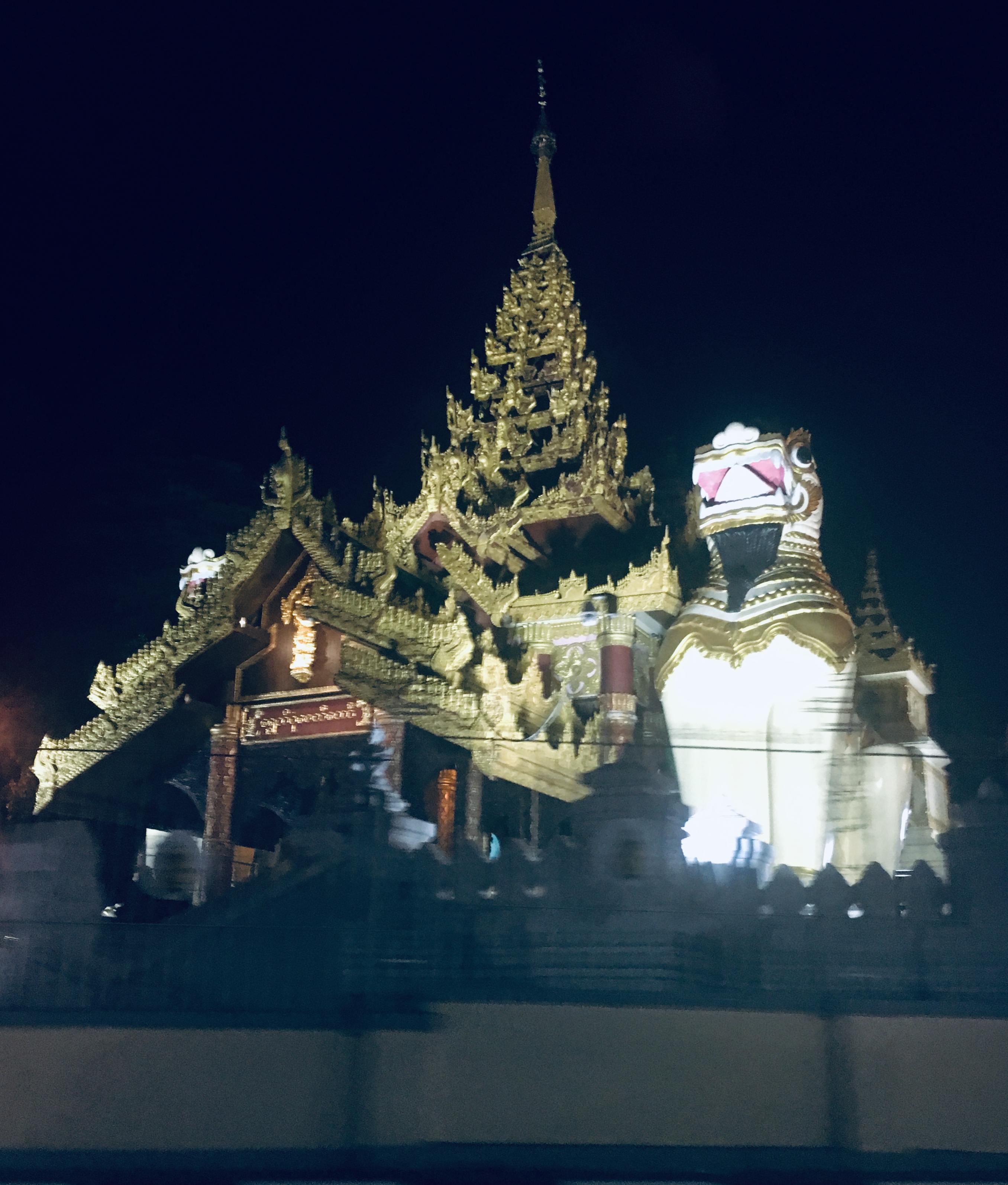
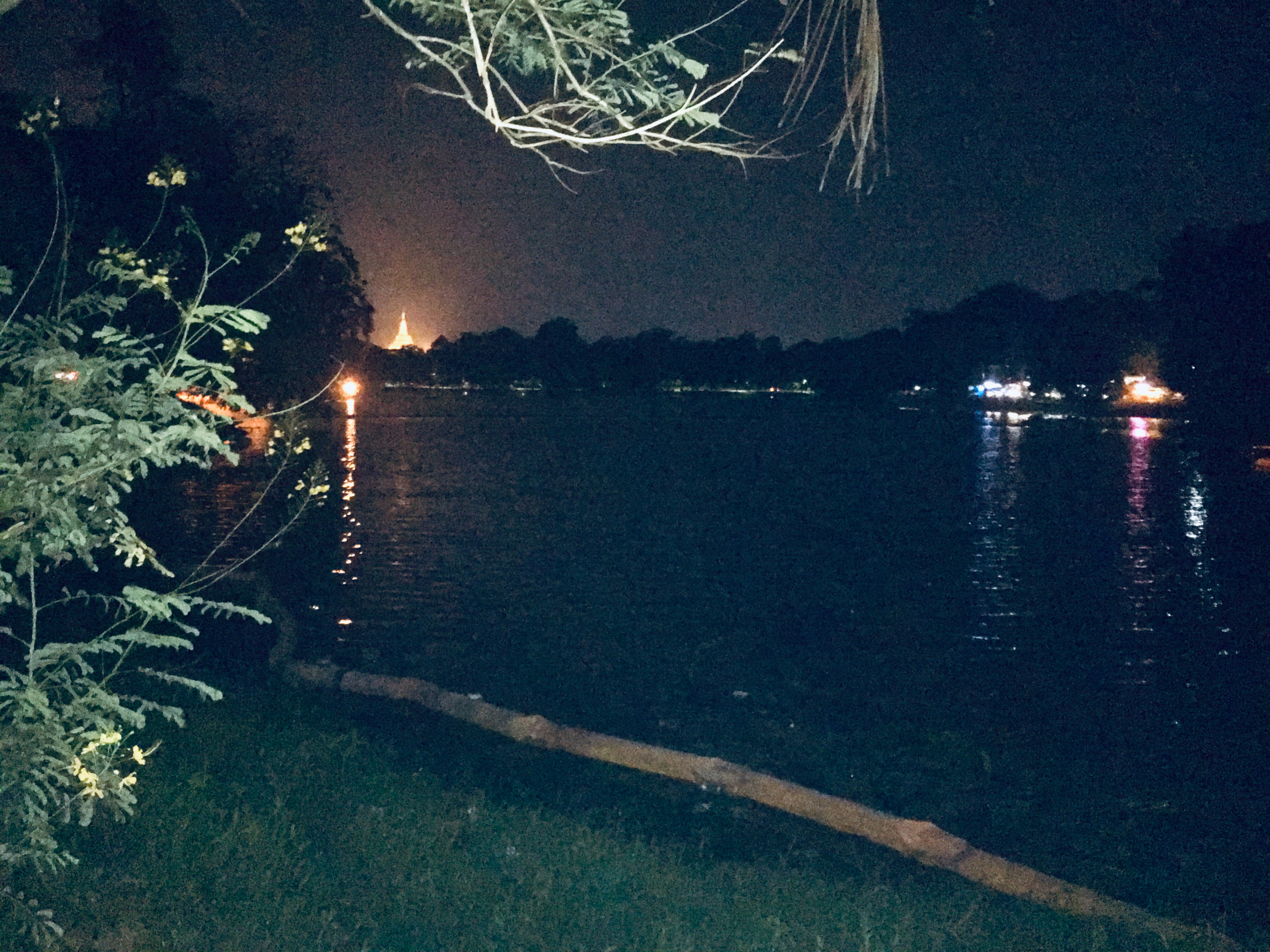
What is fascinating is the fact that these types of events are incredibly new in Myanmar. For those that haven’t heard, Myanmar is in midst of the world’s longest ongoing civil war. One of the major aspects of censorship and regulation is directed towards the arts. Movies, music, and art are where people frequently protest and rebel so the government until very recently has strictly monitored and outlawed these types of events. I saw so many locals both young and old drinking and singing loudly on the boat docks. It was beautiful to see how free they felt after being oppressed for so long. So, I found myself taking a seat, looking out across the beautiful Kandawgyi Lake towards Shwedagon Pagoda, and listening to the laughter and joy around me.








 Angie's International Blog